

Construction Keyword Research:
The Blueprint to Ranking Success
In this third chapter of our Definitive SEO Guide for Construction Businesses, we’ll teach you how to rank your website higher than a skyscraping tower crane.
Previously, we discussed Google’s ranking factors in detail.
Today, we’re diving into the next key ingredient:
Identifying all the keywords your target audience is frantically searching for—from broad terms like “kitchen remodel” to specific, intent-loaded zingers like “how much for a modern farmhouse kitchen renovation near me?”
With these juicy keyword insights, you can optimize your site’s content to get in front of ready-to-hire prospects searching in your area.
And who doesn’t want that kind of hyper-targeted organic traffic?
We’ll cover:
- Profiling your ideal customer and how they search
- Setting a solid keyword strategy aligned with your goals
- Uncovering competitors’ ranked keywords
- Using pro SEO tools to supercharge your keyword lists
- Prioritizing keywords by traffic value and business potential
So, strap that hard hat on tight and let’s dig up more rank-boosting keyword gold than you can carry!
P.S. Stick to the end and grab our FREE, Pre-Built Keyword Research Templates for easy keyword mapping and content planning!
Why Is Keyword Research Important for Construction Companies?
Let’s be real: if you’re a construction company trying to get found online, keyword research isn’t just important.
It’s essential.
Without it, you might as well be building houses without blueprints.
Think about it this way:
If you target the wrong keywords, like those ultra-competitive beast mode phrases everyone is fighting over, your chances of ranking are slimmer than a model’s waistline.
And if your keywords are too broad?
Well, you’ll likely attract a whole lot of window shoppers instead of qualified leads looking to renovate or build.
What Is Keyword Research Anyway?
Keyword research is all about figuring out the actual words and phrases potential customers type into Google when they’re looking for construction services like yours.
By understanding how your target audience searches, you can optimize your website to show up in those results.
It’s kind of like being a mind reader but for search engines instead of thoughts.
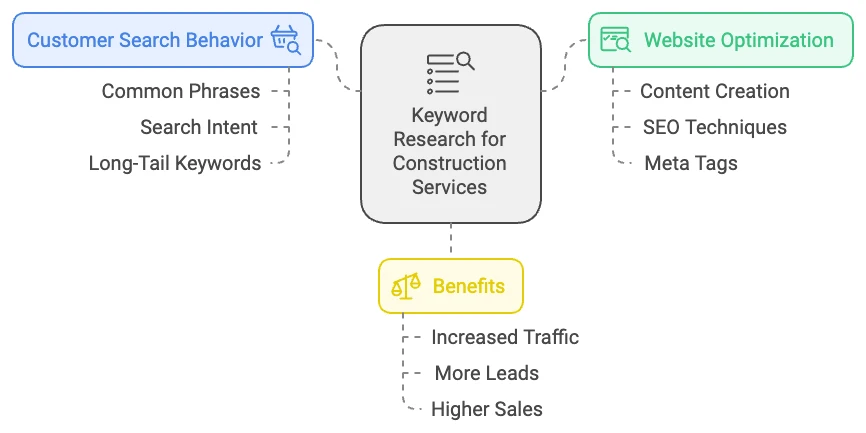
It’s crazy effective for driving more traffic, leads and sales.
Keyword Research 101: Key Terms to Know
Before we dive deeper into the keyword research process, let’s cover some basic lingo you’ll need.
Focus Keyword
This is the main keyword you want a specific page on your website to rank for. It should match the content and intent behind that page.
For example, a focus keyword for your kitchen remodeling services page could be “kitchen remodel [your city].”
Long-tail Keywords
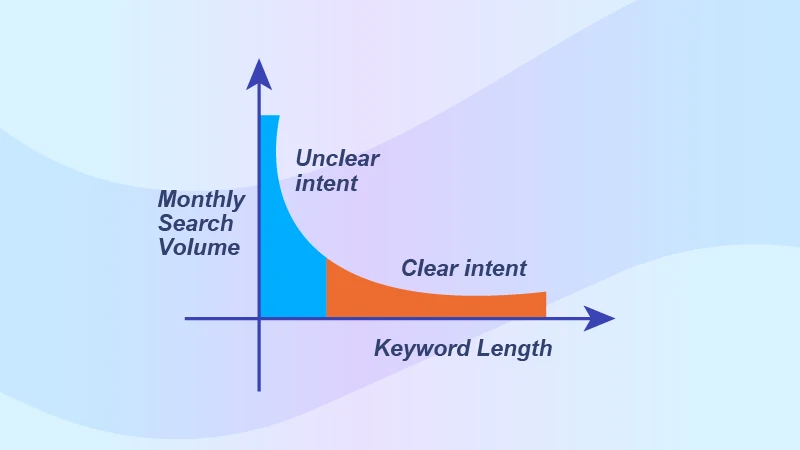
Long-tails are those specific, often question-like keyword phrases that tend to have lower search volumes but higher intent.
Think: “how much does a bathroom renovation cost in Los Angeles”
Keyword Strategy
Not to be confused with a LARP costume, your keyword strategy maps out which keywords to target across your site, how to optimize for them, and how to analyze/adjust your approach based on performance.
Understanding Your Audience and Their Search Intent
Understanding your ideal customers and what they’re actually searching for is key.
It’s like being a well-meaning stalker—the more you know about your audience’s needs, pain points, and online behaviors, the better you can create content that resonates.
As we covered in Chapter 2, you need a clear profile of who these people are: What’s keeping them up at night? What problems are they trying to solve by hiring a construction pro?
The more you can get inside their heads, the easier it’ll be to identify keywords with the right search intent.
And speaking of intent, don’t forget to revisit that handy ranking factors section where we geeked out about the different types—informational, navigational, commercial, transactional, and more.
Knowing the specific intent behind a keyword can help you tailor content for each phase of the buyer’s journey.
How to Research Keywords for Your Construction Website
Step 1. Be Clear About Your Goals and Strategy
Before churning out keywords like an amateur rap artist, pump the brakes and ask yourself some hard-hitting questions:
- What’s the main goal here: generating leads, selling products, or showcasing your portfolio?
- What makes your construction biz so unique: luxe designs, eco-friendly approach, or unicorn contractors?
- Who exactly are you trying to attract: bougie homeowners, property investors, or architects?
- What tantalizing promises does your website make that you need to deliver on?
- What burning questions are your prospects asking about your services?
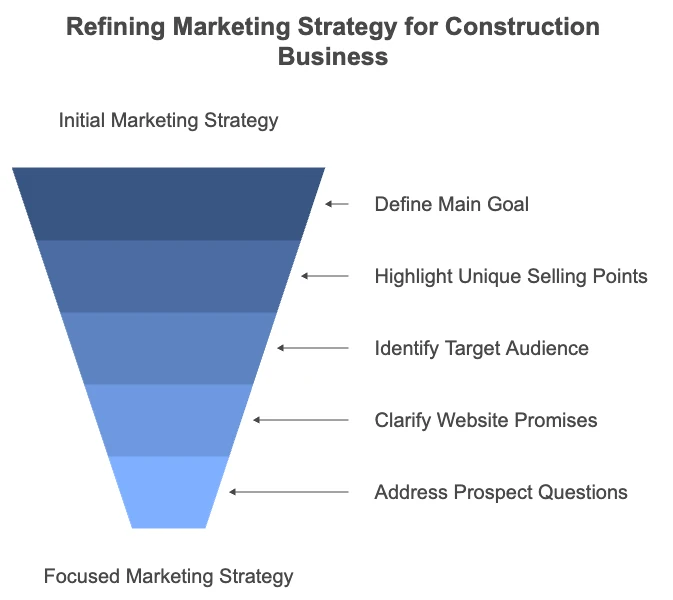
Having a clear strategy focused on your unique goals and target audience will help guide your entire keyword research and content process.
And consider this:
If you have an authoritative site in a stable niche, you can compete with some of those heavyweight, competitive keyword mammoths.
But if you’re new to the game?
Start with less aggressive long-tail variations and build up your content’s strength gradually.
Step 2. Get An Overview of Your Website’s Keyword Visibility
Knowing where you currently stand in Google’s eyes is crucial before trying to climb up the ranks.
That’s where tools like Google Search Console and third-party data titans like Ahrefs and Semrush come in.
Run a big-time audit to see what keywords your site is already ranking for—both the winners on the first couple pages and the stammering fools in no-man’s land.
This will illuminate potential quick-win opportunities you can optimize for with some cunning on-page tweaks.
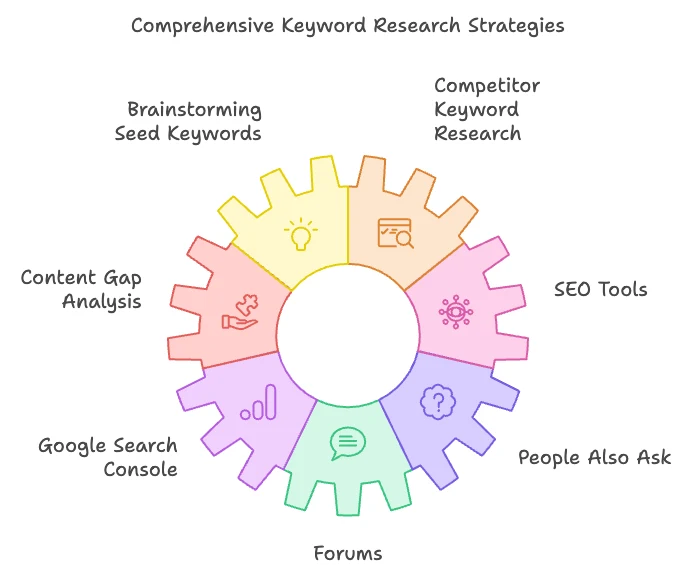
Step 3. Find Construction Keywords (Fast)
OK, enough navel-gazing—it’s time to dig up an endless stream of gritty construction keyword gold.
Brainstorm “Seed” Keywords
First, brainstorm a bunch of broad “seed” keywords related to your core services.
We’re talking about one- or two-word phrases like “kitchen remodeling,” “bathroom renovations,” “home additions,” and so forth.
Don’t overthink it yet. Just vomit out ideas to get your creativity flowing.
Competitor Keyword Research
Now for some sneaky competitive analysis.
There are a couple ways to go about this:
- Search your main keywords in Google and see which of your biggest rivals are ranking. Then, drop their domains into an SEO tool to reveal their whole keyword footprint.
- Or go straight into a pro tool, search a seed keyword, and let it spit out the top websites along with their juicy keyword data.
Either way, you’ll get an inside look at which keywords your competition is successfully ranking for—aka opportunities for you to swoop in and snag.
Use Content Gap Analysis
Similar to competitive analysis, most SEO suite tools have a “Content Gap” or “Content Explorer” feature to quickly see what topics or keywords your rivals are covering that you’re not.
If they’re ranking for things you’ve missed out on, those make excellent content opportunities to break onto the scene.
Just be sure to go more in-depth and add unique value.
Do Keyword Research With SEO Tools
With your seed keyword lists and competitor nuggets in hand, it’s time to unleash the keyword research tool fury! Fire up Ahrefs’ Keywords Explorer or Semrush and start binging on all those deliciously relevant keyword ideas they serve up.
For example, punch in “kitchen remodeling” and instantly get metrics like search volumes, keyword difficulty scores, and estimated traffic levels for thousands of ideas. Then, sort, filter, and export the ones that look promising for further analysis. Simple.
Use Google Search Console
Unless you’re starting an entirely new construction site from scratch, you’ve likely got some existing keyword performance data to dig into—aka free insights!
Head to Google Search Console and look for two things:
- Second-page keywords: These are the gems sitting just behind the curtain on page two of the SERPs. With a bit of on-page optimization magic, you can levitate them to the promised land of page one.
- Currently ranking keywords: See what phrases your site is already earning visibility for. You can more easily rank for closely related or semantically similar keywords.
Essentially, you’re looking for those low-hanging fruit opportunities to quickly boost your keyword visibility before tackling bigger games.
Get Keyword Ideas from Google’s People Also Ask (PAA)
Another sneaky way to reveal more potential keywords? Let Google’s own “People Also Ask” boxes be your mole.
These query refinements show other popular questions and topics related to your initial search. To quickly siphon them all off, use a Chrome extension like Detailed SEO Extension to download complete lists of PAA queries with a click.
Find Keywords on Forums
Where do frustrated homeowners and contractors go to vent, ask questions, and crowdsource advice?
Industry-specific forums and communities, that’s where.
Famous examples in the construction space include Houzz, Reddit’s /r/Construction subreddit, and niche forums.
Spend some time observing the queries and pain points people discuss to identify even more topically relevant keywords.
You can also use handy search operators to scour an entire site for question-based queries containing your target terms.
For example:
site:www.houzz.com inurl:advice “kitchen remodel”
This will show discussions on Houzz containing phrases like “kitchen remodel advice,” “kitchen remodel questions,” etc.
Step 4. Organize Keywords in Silos or Clusters
Google loves efficiently organized websites that logically cluster related content together under the main topic of “silos.”
This makes it easier for them to understand your website structure and what each page is about.
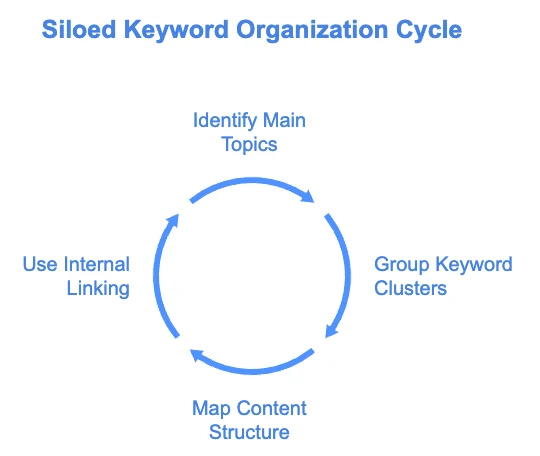
So, rather than haphazardly cramming keywords wherever, take a smarter, siloed approach:
- Identify your main overarching topics (e.g., “kitchen renovations”)
- Group relevant keyword clusters under each subtopic
- Map out your content structure accordingly
- Use internal linking to connect related pages and reinforce relevance
With a tight, clustered content architecture, you’ll create a cohesive, search engine-friendly experience while maximizing your keyword visibility.
Step 5. Analyze and Evaluate Keywords
Churning out a monster list of keyword ideas is just the start.
Next, you’ll need to put on your judgy pants and start evaluating each term based on important SEO metrics.
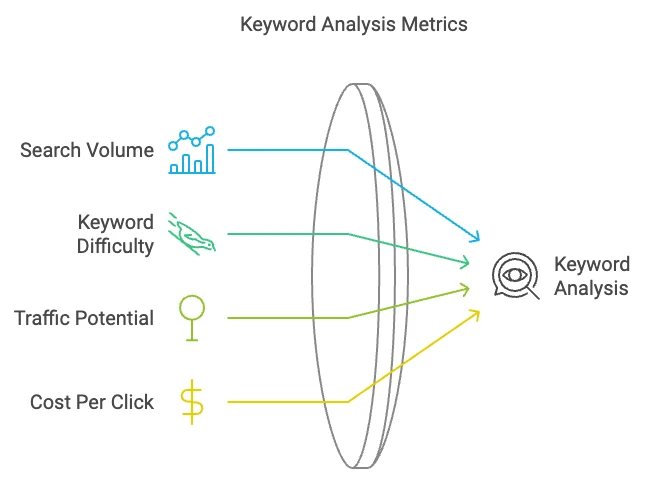
This allows you to focus your efforts on the phrases actually worth targeting.
Search Volume
While not everything, search volume gives you a rough gauge of potential traffic levels for a given keyword.
In most SEO data tools, this metric shows average monthly searches for that term.
Just remember:
Higher volumes don’t always equal more valuable keywords. A high-volume “beast mode” keyword with huge competition could send way less relevant traffic than a laser-focused long-tail with lower searches but higher buyer intent.
Keyword Difficulty
This scoring system, used in tools like Ahrefs’ Keywords Explorer, estimates the difficulty of ranking for a particular keyword based on the strength of the current top-ranking pages.
When determining which keywords to target, balance difficulty against your own website’s authority.
If you’re just a construction startup, those super competitive terms with scores in the 80s+ are probably out of reach starting out.
Traffic Potential
While search volume just looks at pure searches, most keyword research tools also calculate estimated traffic potential—aka how much actual website traffic you could expect to see from ranking well for that term.
This metric factors in areas like ranking probability and typical click-through rates to give you a clearer picture of a keyword’s true traffic value.
Cost Per Click (CPC)
For construction companies running paid ad campaigns on Google, the CPC metric shows the estimated cost-per-click for that keyword in the ads auction.
Higher CPCs usually indicate commercial keywords with higher purchase intent behind them. This metric can help you decide how to prioritize keywords for SEO versus PPC targeting.
While organic traffic is free, factoring in commercial intent and potential lead values can influence your overall keyword strategy and content planning.
Step 6. Prioritize Keywords
Search Intent & User Journey
With all those juicy keyword opportunities analyzed to the nth degree, the final step is whittling them down to a prioritized list of terms to attack first.
Here’s how to separate the high-value targets from the less promising picks.
How to Figure Out the “Business Potential” of a Keyword
When evaluating keywords, always think about the implied search intent behind them. Is this an informational query from someone just researching? A commercial investigator on the hunt for a service provider? Or a transactional soul ready to whip out their wallet?
The higher the commercial and transactional intent, the more prioritized that keyword should be—those are your hottest prospects, after all.
Also, consider the user’s journey and the sales funnel phase in which they’re likely to be involved. An “emergency bathroom repair” query suggests higher urgency than a broad “bathroom remodeling ideas” phrase from someone still in the awareness stage.
Which Keywords to Start With?
SEO metrics alone don’t always indicate a keyword’s actual business value and money-making potential. You’ve got to dig deeper into dimensions like:
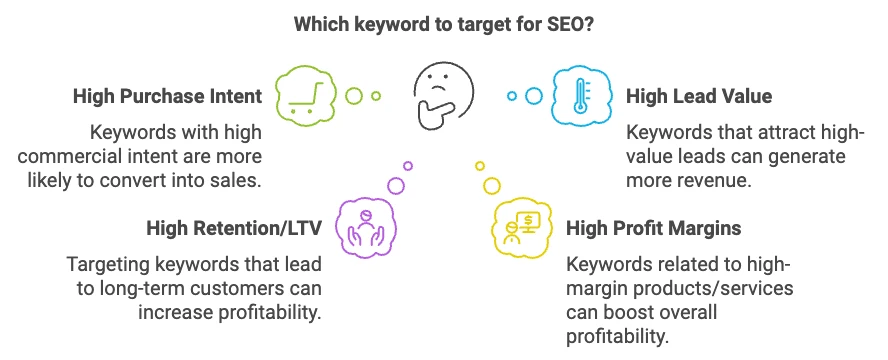
- Purchase intent: How transactional/commercial is this query’s intent?
- Lead value: What’s the average value of a lead/customer from this keyword?
- Retention/LTV: How much is a long-term customer relationship worth?
- Profit margins: What are the economics around your product/service offering?
Sure, netting rankings for “bathroom remodeling” with huge volumes seems attractive…
But if most of those visitors are just pricing shoppers, a smaller “modern farmhouse bathroom remodel” term with higher closing rates may ultimately drive more revenue.
When you’re ready to set your keyword content priorities, focus first on:
- High business value terms that align with your revenue goals
- Low-difficulty opportunities with short-term win potential
- Keyword clusters you can realistically create valuable content for soon
Over time, you’ll want a balanced keyword portfolio of easier wins, moderate difficulty optimizations, and a few ultra-competitive aspirational terms. But don’t overextend early.
On-Page SEO & Technical SEO for Construction Companies
Find out how Back Bay Digital can help your construction company grow with SEO.