

Measuring SEO Campaign Results
So, you’ve poured concrete into your SEO foundation.
But how do you know if it’s set up properly?
Measuring your SEO campaign results isn’t just about watching numbers climb – it’s about understanding what those numbers mean for your construction business.
In this guide, we’ll dig into the metrics that matter for builders like you and introduce some handy tools to help you track your progress.
Whether you’re a one-person show or running a large commercial outfit, these insights will help you nail down your digital marketing strategy.
Key Performance Indicators (KPIs) for Construction Company SEO
Not all metrics are created equal, so here are the five KPIs you should be laser-focused on.
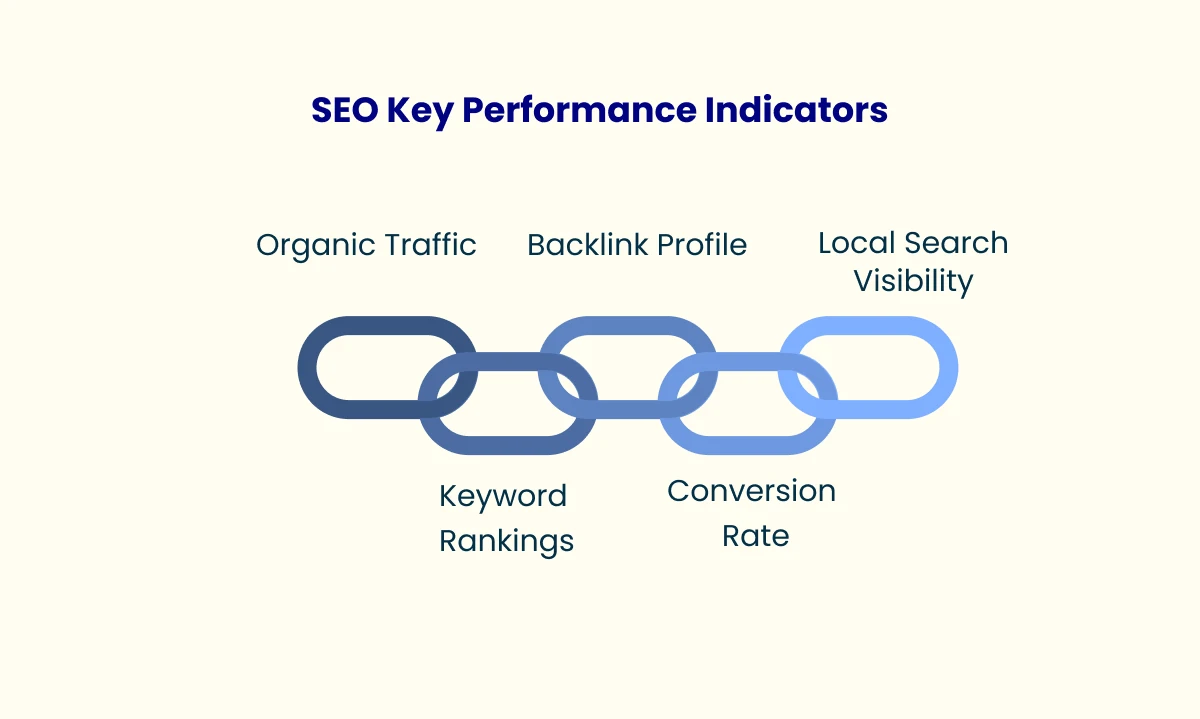
Organic Traffic
This is the bread and butter of SEO. More visitors from search engines? That’s more potential clients checking out your work.
Keyword Rankings
Where do you show up when someone searches “best construction company in [your city]”? Your ranking for key terms can make or break your online visibility.
Backlink Profile
Think of backlinks as online referrals. The more quality sites linking to you, the more Google sees you as the real deal in construction.
Conversion Rate
Traffic is great, but are visitors picking up the phone or filling out your contact form? This KPI tells you if your site is just a pretty facade or a lead-generating machine.
Local Search Visibility
For most construction companies, local is everything. How well you show up in local searches and map packs can directly impact your bottom line.
Tools for Tracking Construction SEO Performance
You wouldn’t show up to a job site without your equipment, right? Same goes for SEO. Here’s your toolkit.
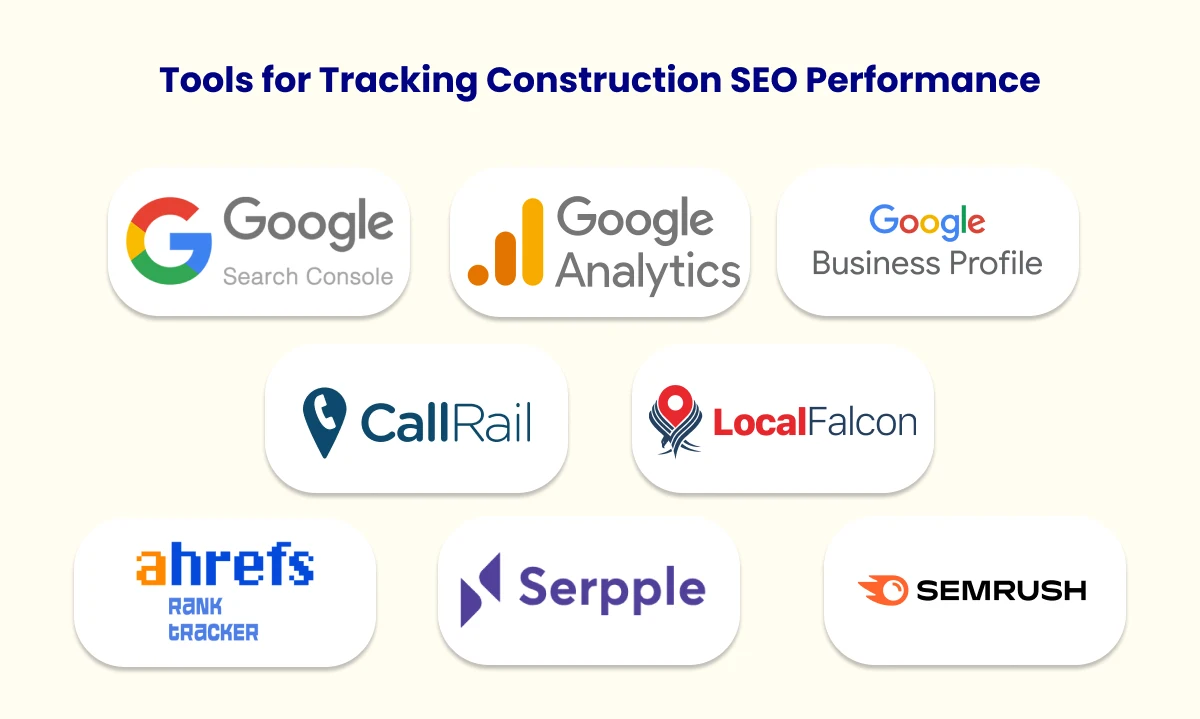
Google Search Console
This free tool is like having X-ray vision for your website’s search performance.
Use it to spot technical hiccups, see which keywords are working for you, and make sure Google can crawl your site properly.
Pro Tip: Keep an eye on pages with lots of impressions but few clicks. A quick title tag or meta description tweak could turn those browsers into leads.
Google Analytics
If Google Search Console is your X-ray, Google Analytics is your full-body MRI.
It shows you where your traffic’s coming from, what visitors are doing on your site, and whether they’re converting.
Set up some custom reports to track construction-specific goals.
How many people are downloading your project portfolios? How long are they spending on your services pages?
This data is gold for refining your strategy.
Organic Keyword Tracking Tools
Tools like Semrush, Ahrefs Rank Tracker, or Serpple are your ranking watchdogs.
They’ll keep tabs on how you’re performing for key terms in your industry.
Don’t just track “construction company” – get specific.
“Green building contractor in [city]” or “commercial renovation specialist” could be the terms that bring in your ideal clients.
Local Falcon
For construction companies, local SEO isn’t just important – it’s essential.
Local Falcon helps you visualize your Google Maps performance with neat heatmaps. Use it to spot areas where you’re killing it (and where you’re getting buried).
It’s particularly handy if you serve multiple neighborhoods or cities.
CallRail
Phone calls are still the lifeblood of many construction businesses.
CallRail helps you track which of your online efforts are making those phones ring.
Integrate it with Google Analytics and you’ll have a clear picture of your customer’s journey from Google search to signed contract.
Google Business Profile Performance
Your Google Business Profile is often the first impression potential clients get. Its performance tracking tool helps you see how people are interacting with your profile.
Are they clicking through to your website? Calling directly from the listing?
Use these insights to fine-tune your profile and stand out from the competition.
Remember: SEO isn’t a “set it and forget it” deal. It’s more like maintaining a well-oiled machine. Keep tweaking, keep measuring, and you’ll build a digital presence as solid as your real-world projects.
Measuring On-Page SEO Effectiveness
On-page SEO is like the blueprint of your digital presence. Get it right, and you’re halfway to ranking success.
Let’s break down how to make sure your on-page elements are up to code.
Ahrefs Site Audit
Think of Ahrefs Site Audit as your SEO inspector.
It’ll crawl through your site, checking for issues that could be holding you back.
Your health score is your overall grade – aim high!
It’ll also flag any content quality issues, like thin or duplicate pages, and point out missing HTML tags that could hurt your rankings.
Pro Tip: Don’t get overwhelmed. Start with the high-priority issues and work your way down. Rome wasn’t built in a day, and neither is perfect SEO.
Google Search Console
We’ve talked about this tool before, but it’s worth another mention for on-page SEO.
The Coverage and Enhancement reports are gold mines for on-page issues.
Keep a close eye on your indexing status to make sure Google can see all your important pages. With more folks searching on phones, mobile usability is crucial.
And don’t forget about Core Web Vitals. Speed and user experience matter more than ever.
Screaming Frog
This little tool packs a big punch. It’ll crawl your site like a spider on caffeine, finding issues you didn’t even know you had.
Use it to spot:
- Duplicate content (not good for SEO or users),
- Missing or incorrect meta tags (these are your billboards, make ’em count),
- And broken links (nothing turns off a potential client faster than a 404 error).
Common On-Page SEO Issues
Watch out for these frequent flyers in the world of on-page SEO problems.
- Duplicate content is a big no-no. Google doesn’t like copycats, so make each page unique.
- If your site moves like molasses, visitors (and Google) will bounce, so keep an eye on those load times.
- Keyword stuffing is so 2004. Write for humans, not robots.
- Make sure your site is mobile optimized as that’s where most of the users are coming from.
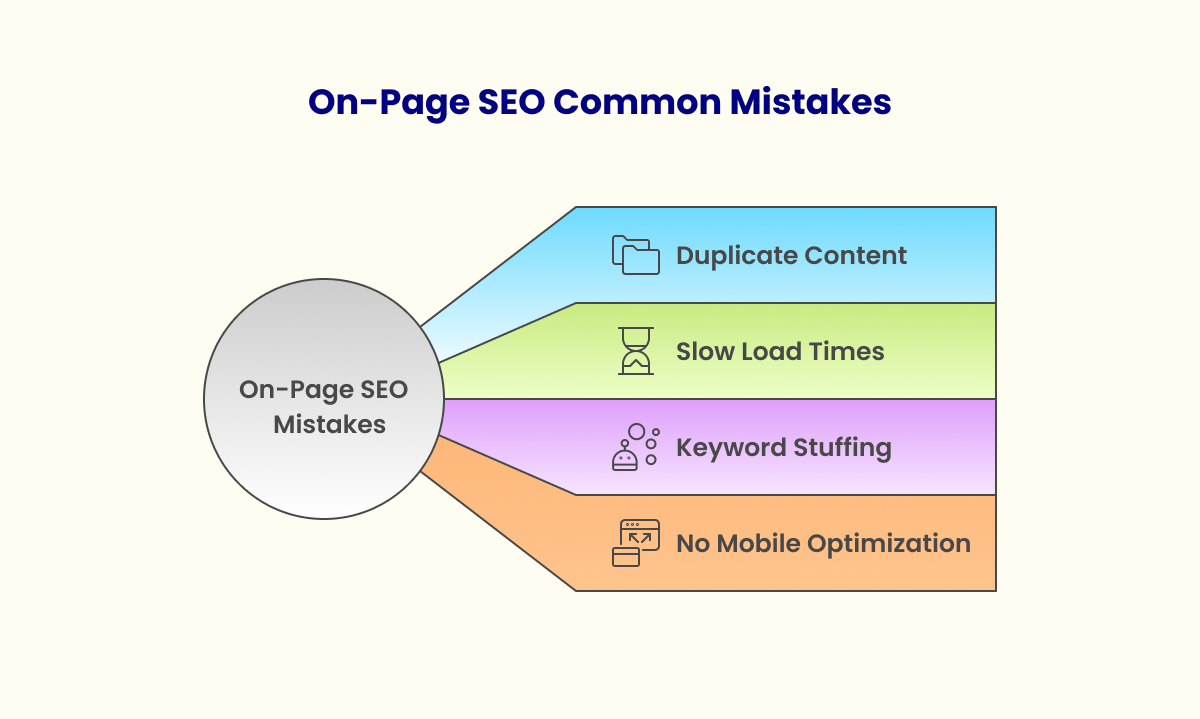
Fix these issues, and you’re well on your way to on-page SEO success.
Evaluating Link-Building Efforts
Links are like votes of confidence for your site. Here’s how to make sure your link profile is solid.
Using Ahrefs Site Explorer
Ahrefs Site Explorer is your one-stop shop for link analysis.
Pay attention to your referring domains – more unique sites linking to you is better.
Look at the Domain Rating (DR) of sites linking to you; higher DR sites passing link juice is the good stuff.
And keep an eye on your link growth over time. Steady growth is healthy, but sudden spikes could be fishy.
Pro Tip: Don’t just check your own site. Peek at your competitors too. You might find some low-hanging fruit for your own link-building efforts.
Key Metrics for Construction Industry Backlinks
When it comes to SEO for construction companies, some links matter more than others as relevance is the key. Links from construction blogs, industry news sites, or local business directories are gold.
A link from a major construction magazine? That’s like winning the SEO lottery.
For local contractors, links from other local businesses or organizations can boost your local SEO. And while “click here” anchor text is okay, “trusted commercial builder in [city]” is even better.
Remember: It’s quality over quantity. One solid, relevant link can outweigh a dozen spammy ones.
Monitoring Link Acquisition Progress
Link building is a marathon, not a sprint.
Set realistic goals and aim for steady growth, not overnight success.
Use Ahrefs Alerts to catch new mentions and link opportunities – set up alerts for your brand name and you’ll never miss a chance to capitalize on a mention.
Don’t forget to track lost links. Sometimes links disappear, and knowing when it happens gives you a chance to win them back.
And definitely keep an eye on your competitors – if they’re getting links from somewhere, maybe you can too.
Keep in mind that good link building takes time. It’s about building relationships, creating great content, and proving your construction company is the best in the business. Stick with it, and you’ll see results.
Pro Tip: Create a monthly link report. Track new links, lost links, and overall growth. It’ll help you spot trends and prove your SEO efforts are paying off.

Tracking Conversions and ROI
In construction, you wouldn’t build a skyscraper without measuring each floor. The same goes for your SEO efforts. Let’s break down how to measure your success.
Setting Up Goal Tracking in Google Analytics 4
Google Analytics 4 is your new best friend.
It’s like having a super-smart intern who never sleeps, tracking everything that happens on your site.
Setting up goals is crucial – think form submissions, calls, or even time spent on key pages.
Here’s the deal:
Define what success looks like for your construction business.
Is it a quote request? A phone call? Someone downloading your project portfolio?
Set these up as goals in GA4, and you’ll have a clear picture of how your SEO efforts translate into real-world interest.
Pro Tip: Use specific naming conventions for your goals. “Contact Form Homepage” is much clearer than “Goal 1” when you’re knee-deep in data later.
Measuring Form Submissions for Construction Quote Requests
Form submissions are the bread and butter of many construction companies’ lead generation. But how do you know if your SEO is driving those submissions?
Set up thank-you pages for each form and track views of those pages as conversions. Even better, use Google Tag Manager to fire an event when someone hits “submit” on your form.
This way, you’ll capture all submissions, even if someone doesn’t make it to the thank-you page.
Tracking Live Chat Conversions
Live chat can be a goldmine for quick questions and lead capture.
Most chat platforms have built-in analytics, but don’t stop there.
Integrate your chat with GA4 to see which pages are driving the most chat engagements.
Bonus: Review chat transcripts regularly. They’re a treasure trove of insight into what potential clients are really asking about.
Monitoring Phone Call Conversions
In construction, a lot of business still happens over the phone.
Tools like CallRail can help you track which online efforts are driving those rings. Integrate it with your analytics, and you’ll see the full picture – from first click to “Hello, how can I help you?”
Don’t forget to record calls (where legal, of course).
It’s not just about quantity; call quality matters too. Are your SEO efforts bringing in tire-kickers or serious prospects?
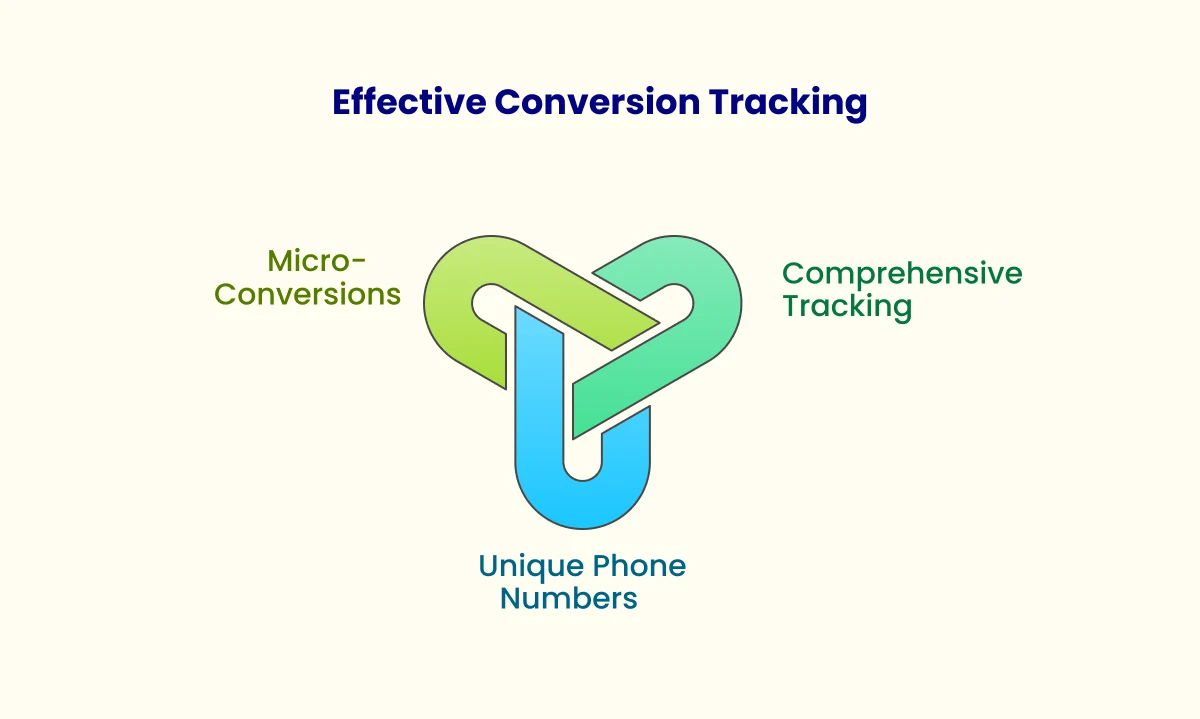
Effective Conversion Tracking Tips
Here’s the secret sauce to really nailing your conversion tracking.
- Track everything. Online, offline, carrier pigeon. If it’s a potential lead, measure it.
- Use unique phone numbers for different campaigns or pages. It’ll help you pinpoint what’s really driving those calls.
- Don’t forget about micro-conversions. Someone downloading your brochure might not be ready to build yet, but they’re one step closer.
Managing Expectations and Timeframes
SEO isn’t instant gratification. It’s more like planting a tree. You don’t get shade the next day, but with care and patience, you’ll have a forest.
Typical Time Frames for SEO Results
Here’s the honest truth:
Most folks see noticeable improvements in about 3-6 months.
But that’s not set in stone.
Some lucky ducks might see changes sooner, while others might need to wait a bit longer.
Think of it like building a house.
You don’t expect to move in a week after breaking ground, right?
SEO takes time to foundation-lay, frame-up, and finish out.
Factors Affecting SEO Progress
Why the range in timelines?
Well, SEO isn’t one-size-fits-all.
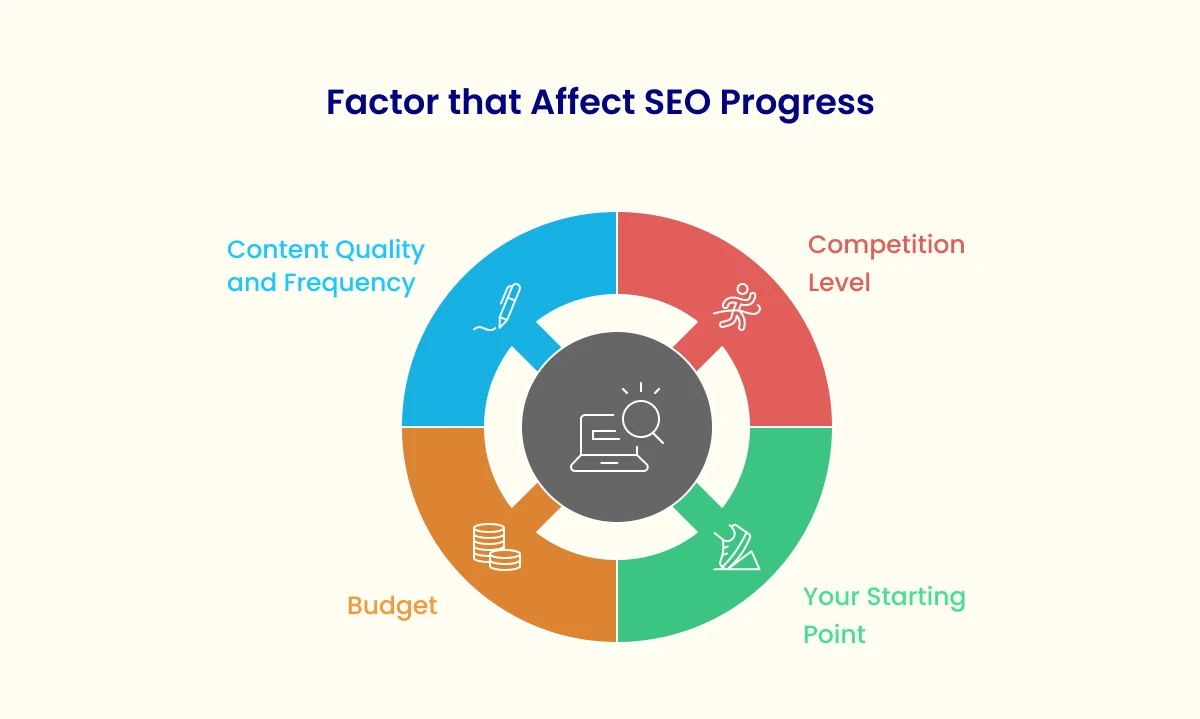
Your progress can be affected by:
- Competition: Trying to rank for “construction company” nationally? You’re in for a long haul. “Eco-friendly tiny home builder in [Small Town]”? You might see results quicker.
- Your starting point: If your site was a mess before, fixing those issues might give you a quick boost.
- Budget: More resources generally means faster progress. But don’t worry, David can still beat Goliath in SEO.
- Content quality and frequency: Fresh, amazing content can speed up your results.
Setting Realistic Expectations
SEO is a long-term investment. As we keep mentioning, it’s not a “set it and forget it” kind of deal.
You wouldn’t build a house and never maintain it, would you?
Be transparent with stakeholders (or yourself) about the SEO journey.
Celebrate small wins along the way – a jump in rankings here, an increase in organic traffic there.
These are all signs you’re on the right track.
Slow and steady wins the race.
Focus on building a solid foundation, creating great content, and providing value to your visitors. The rankings will follow.
Find out how Back Bay Digital can help your construction company grow with SEO.