

Link Building Guide
for Construction Companies
You’ve nailed your on-page SEO and crafted killer content that would make even the toughest general contractor swoon.
But here’s the deal: without a solid link building strategy, your website might as well be a beautifully designed building with no foundation.
In this guide, we’re going to dive deep into the world of link building for construction companies.
We’ll show you how to build a backlink profile that’s as sturdy as your best steel-framed structure and just as impressive to Google as your portfolio is to clients.
Let’s get started.
What is Link Building?
Links are like the internet’s version of word-of-mouth recommendations.
When one website links to another, it’s essentially saying, “Hey, this site’s got some good stuff. Check it out!”
Link building, then, is the process of getting other websites to link back to yours. It’s like convincing other construction pros to recommend your services – except instead of handshakes and business cards, we’re dealing with hyperlinks and anchor text.
But there’s a catch. Not all links are created equal.
A link from a respected industry publication? That’s like getting a thumbs up from the best contractor in town.
A link from a sketchy site that looks like it was built in 1995? Not so much.
Why is Link Building Important for Construction Companies?
Link building isn’t just some fancy SEO trick – it’s a fundamental part of getting your construction company to the top of Google’s results.
See, Google’s algorithm is like a really picky client.
It doesn’t just want to see that you exist; it wants to know that other reputable sources vouch for you. The more high-quality links you have pointing to your site, the more credibility you have in Google’s eyes.
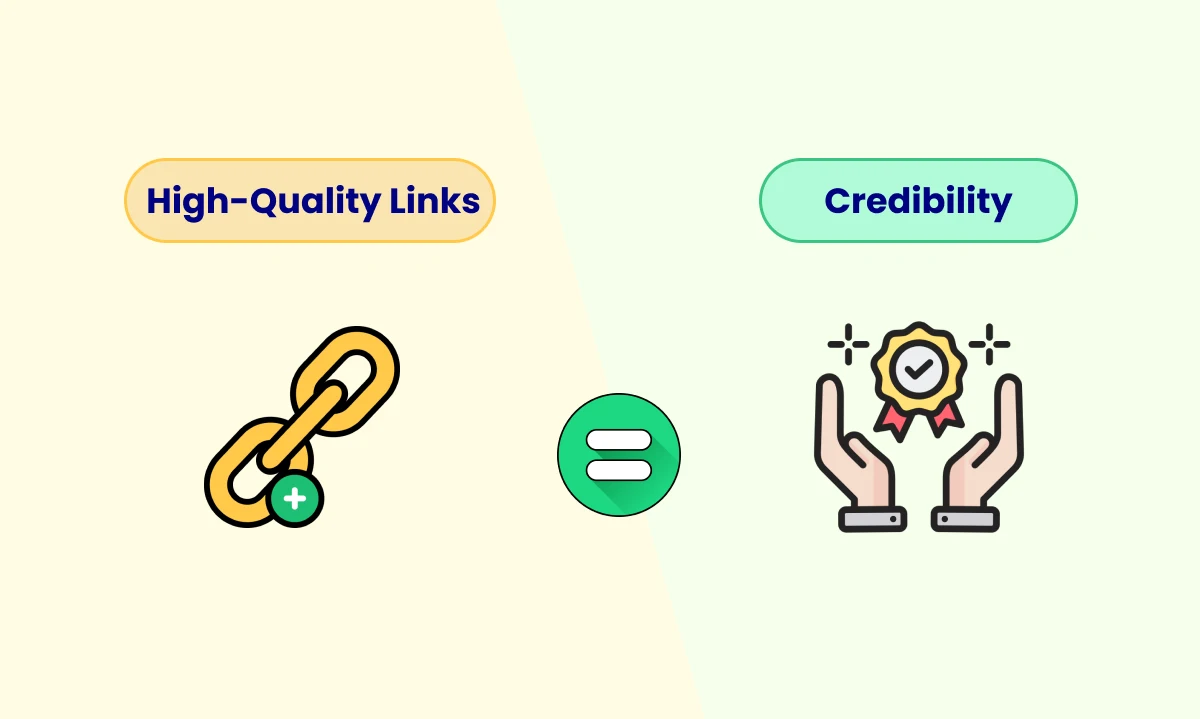
But it’s not just about quantity. Quality matters big time.
A handful of links from authoritative sites can outweigh hundreds of low-quality links. Plus, good links from relevant sites can drive qualified leads straight to your virtual doorstep.
It’s like having a network of fellow pros sending business your way – except it’s happening 24/7, even when you’re off the clock.
Links vs. Referring Domains
When you’re diving into link building, you’ll hear a lot about links and referring domains. They might sound similar, but understanding the difference is crucial for your SEO strategy.
Links are like individual recommendations. Each time another website links to yours, that’s one link. But referring domains? That’s the number of unique websites linking to you.
Here’s why it matters:
Having 100 links from one website isn’t as powerful as having links from 100 different websites. It’s like the difference between one client giving you 100 glowing reviews and 100 different clients each giving you a thumbs up.
Which do you think carries more weight?
Google’s smart enough to know the difference, and it tends to value diversity in your link profile. So while you shouldn’t turn down multiple links from a great site, your ultimate goal should be to cast a wide net and get links from a variety of relevant, high-quality domains.
What Are the Different Anchor Text Types?
The anchor text is the clickable text in a hyperlink, and it’s more important than the brand on your hard hat.
Why? Because it tells both users and search engines what the linked page is all about. Let’s break down the types.
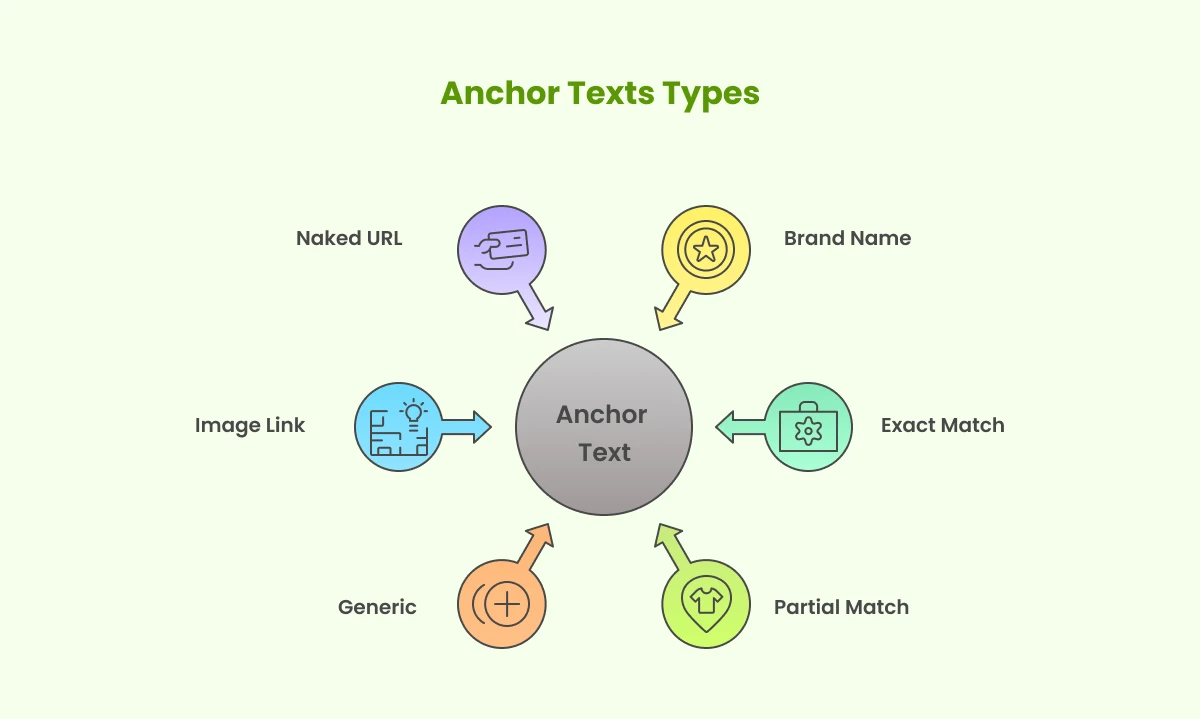
Brand Name
This is your company name in lights. “ABC Construction” or “BuildRight Inc.” It’s like introducing yourself at a networking event – straightforward and memorable.
Exact Match
Here’s where you get specific. If you’re linking to a page about “commercial building renovation,” that’s exactly what the anchor text says. It’s like labeling your toolbox – everything’s clear and in its place.
Partial Match
This is the compromise between exact match and brand name. Think “Smith’s renovation services” or “BuildRight commercial projects.” It’s like wearing a company shirt that also describes what you do.
Generic
“Click here” or “read more” fall into this category. It’s not descriptive, but sometimes it gets the job done. Just like a “Employees Must Wash Hands” sign – basic, but necessary.
Image Link
No text here, folks. The image itself is the link. The alt text becomes your anchor text. It’s like those blueprint symbols that represent doors or windows – no words needed.
Naked URL
This is just the raw URL, like “https://www.smithconstruction.com”. It’s the equivalent of handing someone your business card without saying a word.
Bottomline: Mix it up! A natural link profile has a variety of anchor text types. Don’t go overboard with an exact match – that’s like showing up to a job site with nothing but hammers.
Do-Follow vs. No-Follow Links
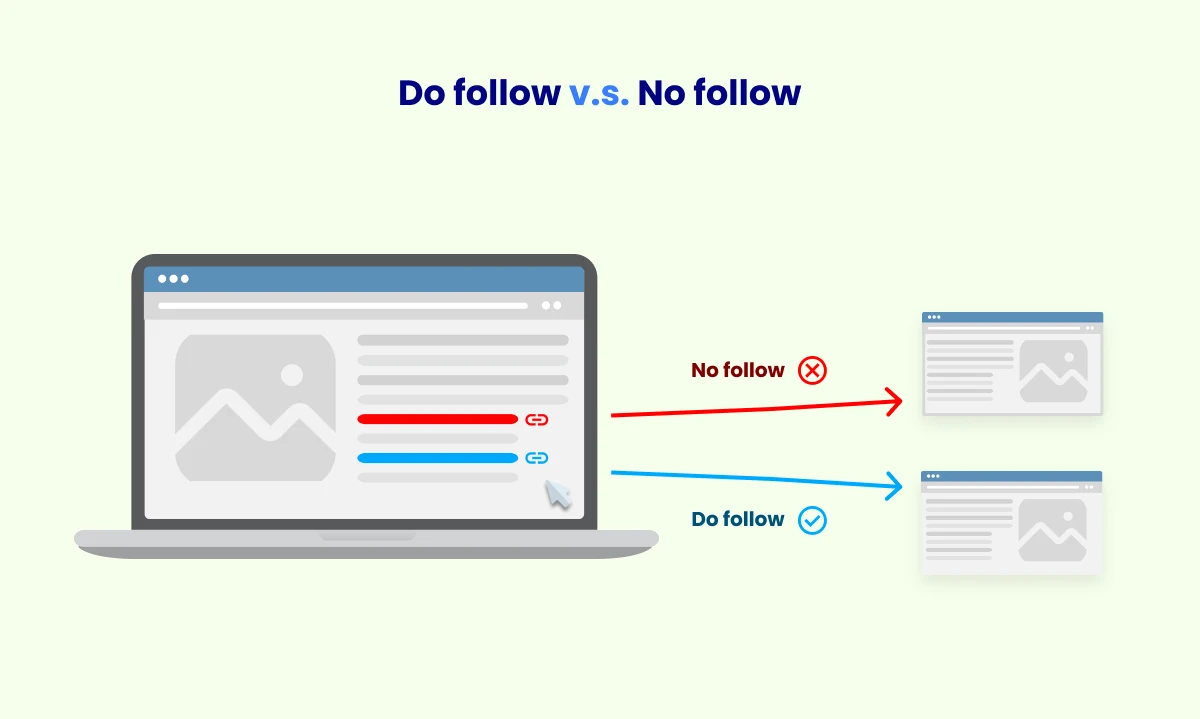
Do-follow and no-follow links are like the foreman and the intern of the link world – they both have their place, but one carries a lot more weight.
Do-follow links are the heavy lifters. They pass link equity (more on that in a sec) and tell search engines, “Hey, this site’s legit. Count this link.”
Again, it’s like a glowing recommendation from a respected industry veteran.
No-follow links? They’ve got a little tag that says “rel=nofollow.”
This tells search engines, “Don’t count this for ranking purposes.” It’s like a casual mention at a networking event – nice to have, but not as powerful.
Counterintuitive, but you need both.
A link profile with only do-follow links looks as suspicious as a perfectly clean jobsite. Mix it up to keep it natural.
What is Link Equity?
Link equity, also known as “link juice” (yeah, we know, it sounds like something you’d find in a sketchy vending machine), is the SEO value that gets passed from one page to another through links.
It’s just like electrical wiring in a building.
The more powerful the source (high-authority website), and the better the connection (relevant, do-follow link), the more “juice” flows to your page.
Different SEO tools measure this in different ways:
- Ahrefs calls it Domain Rating (DR)
- Moz has Domain Authority (DA)
- SEMrush uses Authority Score
These aren’t Google metrics, but they give you a good idea of how much SEO power a linking domain might pass to you.
Higher link equity can boost your page’s ranking potential faster than a crane can lift a steel beam.
7 Characteristics of
High-Quality Backlinks
We’ve ranted on and on a lot about “high-quality” backlinks so far. But what do we really mean here? Let us explain.
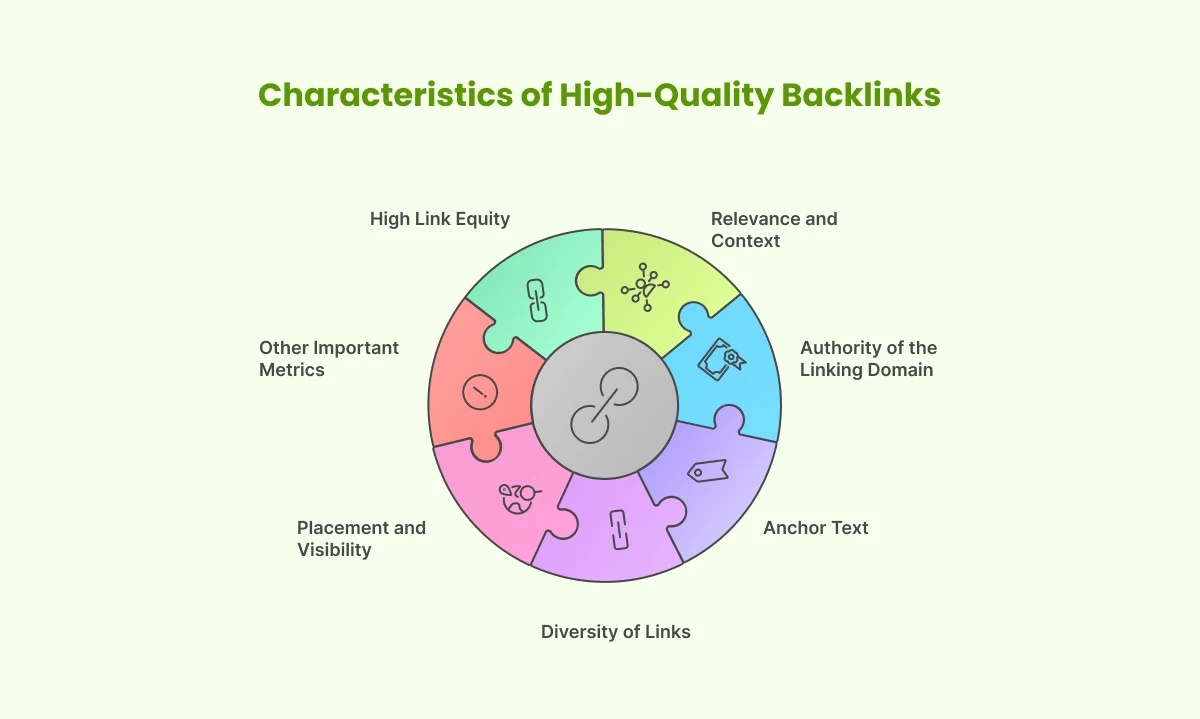
1. High Link Equity
First things first: you want links that pack a punch.
Aim for backlinks from pages with link equity that’s at least as good as, if not better than, your target page.
2. Relevance and Context
A link from “Bob’s Discount Socks” won’t do much for your construction biz.
You want links from construction blogs, industry news sites, and related service providers.
It’s like getting referrals within your professional network – they just make sense.
3. Authority of the Linking Domain
We’re talking big names here. A link from a high-DA site like Construction Dive or Engineering News-Record is the link-building equivalent of a major contract win.
These authoritative domains are like the industry big shots – when they vouch for you, people (and search engines) listen.
4. Anchor Text
The clickable part of your link matters. It should be relevant and descriptive, like using “expert commercial renovations” instead of just “click here.”
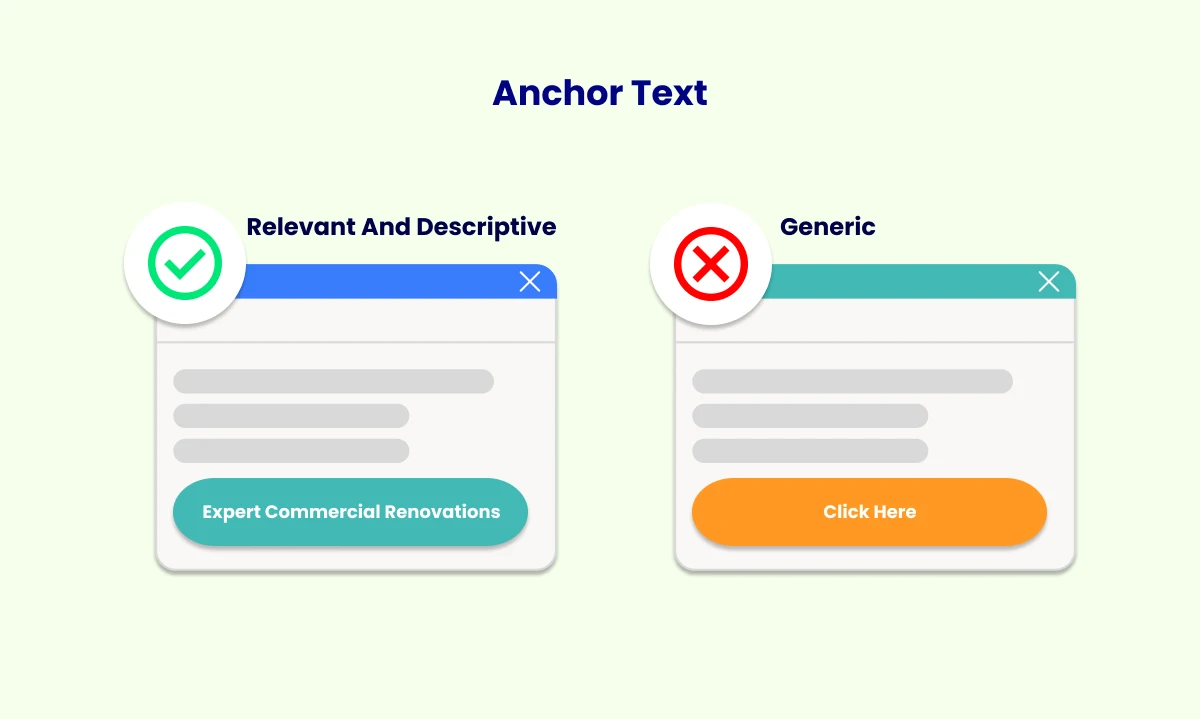
But here’s a pro tip: For new sites, stick to branded, naked URL, or generic anchor text. And whatever you do, don’t overuse exact match anchor text.
That’s like showing up to a job site in a suit. Plainly suspicious.
5. Diversity of Links
Variety is the spice of life, and it’s the secret sauce of a natural link profile.
Mix it up with guest posts, directory listings, and editorial mentions.
It’s very similar to having a diverse skill set – it makes you more valuable and less vulnerable to market (or algorithm) changes.
6. Placement and Visibility
Location, location, location! Links in the main content are like prime real estate – they’re worth more than those stuck in the footer or sidebar.
In-content links are the penthouse suite of the link world: more natural, more likely to be clicked, and more valuable overall.
7. Other Important Metrics
Here’s a quick checklist of other must-haves:
- Verifiable organic traffic: No ghost towns! The site must have traffic to it.
- Clean neighborhood: No links to sketchy sites.
- Do-follow status: Remember our chat about link juice?
- High Domain Rank: More of that sweet, sweet link equity.
Remember, building a high-quality backlink profile is like constructing a skyscraper – it takes time, effort, and attention to detail.
But get it right, and you’ll have a structure that stands tall online for years to come.
How to Build a Robust Backlink Portfolio for Your Construction Business
It’s time to build a backlink portfolio that’s as solid as your foundations and as impressive as your skyline projects.
Creating Link-Worthy Content
Start with high-quality blog posts and articles. We’re talking in-depth, meaty content that answers the burning questions in your industry.
Maybe it’s a comprehensive guide on sustainable building materials or an analysis of the latest construction tech trends.
Whatever it is, make it so good that other sites can’t help but reference it.
Next, add infographics that break down complex construction processes or illustrate industry statistics in a way that’s easier to digest than a blueprint.
Speaking of statistics: Become the go-to source for construction industry data. Conduct surveys, compile research, and present it in a way that journalists and bloggers can’t resist citing.
Remember: When it comes to link building, being quotable is as valuable as being skilled with a welding torch.
Guest Posting Opportunities
Guest posting is your chance to show off your expertise on someone else’s job site. The added benefit is that you get a do-follow backlink in return.
Identifying reputable construction and real estate blogs that accept guest posts. Make sure they have good Domain Authority as you want your backlink to come from a site that Google respects.
When pitching your guest post, come armed with unique ideas that align with the host site’s content but also showcase your expertise.
Maybe it’s an article on “10 Innovative Materials Reshaping Modern Construction” or “How AI is Transforming Project Management in Construction.”
And don’t just focus on getting that backlink.
Provide genuine value to the host site’s audience.
The more valuable your content, the more likely they are to invite you back – and the more weight that backlink will carry.
Directory Listings
OK, you must be thinking, “Directory listings? Isn’t that so 2005?” – but hear us out.
While it’s true that not all directories are created equal, the right ones can still pack a punch for your link profile.
The key is to be selective.
Look for high-quality, industry-specific directories.
We’re talking about respected construction industry directories, local business listings, and professional association websites.
These are like the Yellow Pages for the digital age, but with the added SEO juice.
Start with your local Chamber of Commerce and industry associations like the Associated General Contractors of America. Then go about niche directories specific to your specialties, whether that’s green building, historic restoration, or commercial construction.
Remember: Consistency is key. Use the same NAP (Name, Address, Phone number) information across all listings – consistency will build trust and credibility.
Using HARO for Link Building
HARO (Help a Reporter Out) is your secret weapon in the link building arsenal. It’s your direct line to journalists who are actively looking for expert sources.
And guess what?
As a construction professional, you’re exactly the kind of expert they’re after.
Here’s how it works:
Sign up for HARO and you’ll receive daily emails with queries from journalists.
Keep an eye out for anything related to construction, real estate, or your specific niche. When you spot a relevant query, respond quickly with a concise, valuable answer.
The key is to provide genuinely helpful information, not a sales pitch.
If a journalist uses your response, boom – you’ve just landed a high-quality backlink from a reputable news site.
Pro Tip: Set up email filters to catch construction-related queries instantly. When it comes to HARO, the early bird gets the backlink.
Broken Link Building Techniques
Broken link building is like spotting a structural flaw in a building and offering to fix it. More than solving a problem, you’re creating an opportunity for a new backlink.
Here’s how it works:
- Use tools like Ahrefs’ Broken Link Checker to find broken links on construction-related websites.
- When you find one, reach out to the site owner with a friendly heads-up about the broken link.
- Then, like a true professional, offer your own relevant content as a replacement.
For example, if you find a broken link about sustainable building materials, and you’ve got a killer blog post on the same topic, bam!
You’ve just turned a broken link into a backlink opportunity.
And it’s all about adding value.
You’re not just asking for a link. You’re helping improve their site while showcasing your expertise. It’s a win-win situation that’ll have site owners thanking you faster than you can say “foundation repair.”
Link Reclamation Strategies
If you want to know how finding buried treasure in your backyard feels like, try link reclamation.
First, search for mentions of your brand or notable projects that don’t include a link. Tools like Google Alerts or Mention can be your trusty metal detectors here.
When you find an unlinked mention, reach out to the site owner with a polite request to add a link.
But don’t stop there!
Look for misspellings of your brand name or incorrect URLs.
These are like typos in a blueprint and they need fixing.
Contact the site owners and offer the correct information. Most will be happy to update, and voila! You’ve just reclaimed a lost link.
It’s all about ensuring your existing mentions are working hard for you.
Link Building with Press Releases
While it’s true that press releases aren’t the link building powerhouse they once were, they still have a place in your strategy.
The key is to use press releases strategically.
Don’t just blast out a release every time you hammer a nail. Save them for genuinely newsworthy events – major project completions, innovative construction techniques, or significant company milestones.
When you do send out a release, make sure it’s chock-full of valuable, quotable information.
Journalists are picky clients. Give them what they want, and they’ll want more.
And hey, even if the links from the press release itself are no-follow, the exposure can lead to organic, high-quality backlinks down the line.
Participating in Industry Forums and Q&A Sites
This strategy is all about showcasing your expertise and building relationships – with a side of sweet backlinks.
Platforms like Quora and Reddit are goldmines for construction-related questions. Dive in and start providing thoughtful, detailed answers.
But remember, this isn’t a billboard for your business.
Provide genuine value first, and only link to your site when it adds to the answer.
Don’t ignore industry-specific forums either – places where professionals in your industry gather to share knowledge and swap stories.
Become a regular contributor, build your reputation, and when appropriate, share links to your most valuable content.
Guess the beauty of this approach?
Hint: It’s not just about the backlinks.
You’re establishing yourself as an industry authority, which can lead to all sorts of opportunities down the road. You’re building a reputation as the go-to contractor in your area – but on a global scale.
Utilizing Local Sponsorships and Partnerships
Local sponsorships and partnerships is the community potluck of link building – everyone brings something to the table and everyone benefits.
Start sponsoring local events – everything from little league teams to community festivals. Not only do you get a backlink from the event website, but you’re also boosting your local visibility.
Then, look for collaboration opportunities with other local businesses as well.
Maybe you team up with a local realtor for a “Home Improvement 101” seminar, or partner with a landscaping company for a “Complete Home Exterior Makeover” contest.
Each partnership is an opportunity for mutual backlinks and expanded reach.
More than helping you with SEO, these partnerships will build your reputation in the local community. In other words, you’d be maximizing your chances of getting more local business.
Disavowing Bad Links
Time for some link hygiene.
Just like you wouldn’t use subpar materials on a job site, you don’t want sketchy links dragging down your SEO.
First, play detective with Semrush’s Backlink Audit tool. It’ll help you spot those toxic links faster than you can say “structural integrity compromised.”
Once you’ve identified the bad apples, it’s time to break out the big guns: Google’s Disavow Tool.
It’s like telling Google, “Hey, these links? Not with us.”
But use it wisely – you don’t want to accidentally disavow good links.
Build High Quality Backlinks & Maintain an Even Better Backlink Profile
hew! We’ve covered more ground than a bulldozer on a busy day.
We’ve built a solid foundation of link building knowledge, from creating link-worthy content to reclaiming lost links and even cleaning up the bad ones.
The key theme to remember is that link building is more than just about quantity – it’s about quality, relevance, and diversity.
It’s a marathon, not a sprint, with a payoff that’s worth it.
Improved rankings, increased authority, more visibility, and most of all, more business for your construction business.
But hey, we’re not done yet!
Up next, we’re diving into the world of Local SEO for your construction biz. Because once you’ve built those links, it’s time to dominate your local market.
Local SEO for Construction Companies
Find out how Back Bay Digital can help your construction company grow with SEO.